
Hi, I'm DURAND H.. I live in Oklahoma. Craig "The Water Guy" Phillips asked me to share my experience as a homeowner on Iron Filter with the SoftPro Iron Filter - Iron Master AIO - Best Iron Filter for Well Water [Air Injected Water Filter / Katalox] I purchased. This is how my adventures played out. I hope this helps you in your decision.
Did you know that sulfur-contaminated well water can make your entire home smell like rotten eggs and turn your plumbing fixtures black?
I learned this the hard way when our 17-year-old water treatment system finally gave up the ghost last spring.
What followed was a nightmare that I wouldn't wish on anyone - a cheap "solution" that made everything worse, and a journey that eventually led me to the Iron Master filter that saved our sanity.
I've been using this system for eight months now, and I'm ready to share everything - the good, the challenging, and the honest truth about whether this iron filter lives up to its promises. If you're dealing with iron-contaminated well water, sulfur smells, or black particles staining your fixtures, this detailed account of my experience might be exactly what you need to make an informed decision.
The Water Crisis That Started It All
Let me paint you a picture of what we were dealing with. Our house sits on a private well that's served us faithfully for nearly two decades, but the water coming from it was becoming increasingly problematic.
The sulfur smell hit you the moment you walked through the front door. It wasn't just a faint odor - this was a full-on assault on your senses that made guests wrinkle their noses and ask if we had a gas leak. Showers became something you rushed through, not because of time constraints, but because the smell was overwhelming.
But the odor was just the beginning. Black particles started appearing in our water, and everything they touched turned an unsightly dark color. Our white bathroom fixtures developed stubborn stains that no amount of scrubbing could remove. The toilet bowls looked perpetually dirty, and our once-pristine kitchen sink resembled something from a neglected rental property.
The iron content in our water was creating havoc throughout our plumbing system. I measured the incoming water at 4.2 parts per million of iron - well above the EPA's secondary standard of 0.3 ppm. The ferrous iron was best well water iron filter oxidizing in our pipes, creating those black particles that were staining everything and clogging our faucet aerators.
Why does this happen to well water?
Ground water naturally picks up iron and sulfur as it moves through iron-rich soil and rock formations. When that water sits in an oxygen-free environment like an underground aquifer, the iron remains dissolved and invisible. But the moment it hits air in your plumbing system, it oxidizes and becomes visible as those nasty black particles.
The sulfur bacteria in our well were feeding on the iron and producing hydrogen sulfide gas - that's iron filter for well water what was creating the rotten egg smell. These bacteria thrive in the anaerobic environment of well water, and once they establish themselves, they're incredibly difficult to eliminate without proper treatment.
Our old system had been managing these issues adequately for years, but when it failed, we were suddenly experiencing the full force of our water quality problems. The impact went beyond just aesthetics and odor. Our water heater was working harder due to mineral buildup, our appliances were suffering, and honestly, we were embarrassed to have anyone over to the house.
The Home Depot Disaster: A Costly Mistake
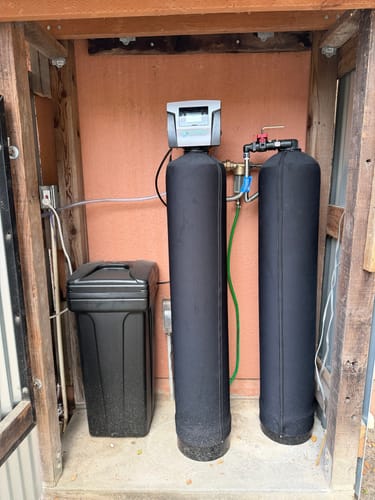
When our old system died, I made what I now realize was a classic homeowner mistake - I panicked and grabbed the first "solution" I could find at a big box store.
The Home Depot iron filter looked reasonable enough on paper. The price was attractive, the packaging promised iron removal, and the salesperson assured me it would solve our problems. What could go wrong?
Everything, as it turned out.
The installation went smoothly enough, and for the first few days, I was cautiously optimistic. But within a week, it became clear that this budget filter was completely overwhelmed by our water conditions. Not only did it fail to remove the iron and sulfur, but it actually seemed to make things worse.
Our plumbing fixtures went from stained to completely black. The sulfur smell intensified to the point where we were opening windows just to air out the house after someone took a shower. I tested the water coming out of the system, and the iron levels were actually higher than before - the cheap filter media was breaking down and adding particles to our water supply.
What went wrong with the cheap filter?
After doing research (which I should have done before buying), I learned that basic iron filters use simple carbon or sand media that can't handle high iron concentrations or sulfur bacteria. They're designed for minor iron issues, not the serious contamination we were dealing with.
The filter I'd purchased had no oxidation mechanism, which meant it was trying to trap dissolved iron that was still invisible. Without proper oxidation, the iron just passed right through, and the minimal media inside quickly became saturated and useless.
Worse yet, the stagnant water in the filter housing became a breeding ground for the very sulfur bacteria we were trying to eliminate. The system had no backwash capability, so contaminated media just sat there, festering and adding to our problems.
After two months of increasingly worse water quality, I finally admitted defeat and started researching proper iron filtration systems. The Home Depot filter had cost us $300, but when you factored in the wasted time, continued water problems, and additional plumbing damage, the real cost was much higher.
This experience taught me that water treatment isn't an area where you can cut corners. The chemistry involved is complex, and you need equipment designed specifically for your water conditions.
Research Phase: Learning What Actually Works
After the Home Depot debacle, I was determined to get it right the second time. I spent weeks researching iron filtration technologies, reading technical papers, and trying to understand the science behind effective water treatment.
What I learned about iron filtration changed everything.
Effective iron removal requires a two-step process: oxidation followed by filtration. You can't just filter dissolved iron - you have to convert it from its dissolved ferrous state to its solid ferric state first. Only then can it be trapped and removed.
There are several ways to achieve this oxidation. Air injection systems bubble oxygen into the water, converting ferrous iron to ferric iron. Chlorine injection systems use chemical oxidation. Some systems use specialized catalytic media that promotes oxidation through contact.
I also discovered that sulfur removal requires different considerations. Hydrogen sulfide gas can be removed through aeration, but sulfur bacteria need to be killed and filtered out. Some systems combine chlorination with filtration specifically to address this dual challenge.
The key specifications I learned to look for included:
**Flow rate capacity** - The system needed to handle our household demand without creating pressure drops. With four family members and typical appliance usage, I calculated we needed at least 12 gallons per minute capacity.
**Media type and quantity** - Catalytic carbon, Katalox Light, or specialized iron removal media designed for high-iron applications. The quantity needed to be sufficient for our contamination levels and usage patterns.
**Regeneration and backwash systems** - Automatic backwashing to keep the media clean and functional. Manual systems might save money upfront but require constant attention.
**Certifications and testing** - NSF certification for specific contaminant removal claims. Third-party testing data showing actual performance numbers, not just marketing claims.
After evaluating different technologies, I narrowed it down to air injection systems. They're chemical-free, effective for both iron and sulfur, and don't require ongoing chemical purchases. The Iron Master kept appearing in my research as a well-engineered example of this technology.
Why I Chose the Iron Master System

Several factors ultimately led me to the Iron Master after weeks of comparison shopping and technical research.
**The air injection technology made sense for our specific problems.** Unlike chemical systems that require ongoing maintenance and consumable costs, air injection is elegant in its simplicity. The system injects air into the water stream, providing the oxygen needed to convert dissolved iron into filterable particles. This same process also helps eliminate hydrogen sulfide gas that was causing our sulfur odor.
The technical specifications aligned perfectly with our needs. The system is rated for iron removal up to 30 ppm and hydrogen sulfide removal up to 5 ppm - well above our measured contamination levels. The 12 GPM flow rate meant we wouldn't experience pressure drops during peak usage periods.
**What really impressed me was the Katalox Light media.** This isn't just sand or carbon - it's an engineered catalytic media that promotes iron oxidation while providing filtration. The manufacturer data showed this media lasting 10-15 years under normal residential use, which meant lower long-term operating costs compared to systems requiring frequent media replacement.
The automatic backwash controller was another deciding factor. Based on my Home Depot experience, I knew that any system requiring manual intervention would eventually be neglected. The Iron Master's controller automatically backwashes the media based on time and usage, keeping the system functioning optimally without my constant attention.
I also appreciated that the system is assembled in the United States with components sourced from established suppliers. After dealing with a cheap import filter, I wanted something built to last with available parts and service support.
**The sizing options were perfect for our application.** Unlike one-size-fits-all big box solutions, the Iron Master comes in multiple tank sizes and configurations. I was able to select a system sized specifically for our household demand and contamination levels.
Finally, the company's technical support during the pre-purchase phase was exceptional. I spoke with actual water treatment professionals who asked detailed questions about our water conditions and usage patterns. They provided sizing recommendations based on our specific situation rather than just trying to sell the most expensive option.
Installation Experience and First Impressions
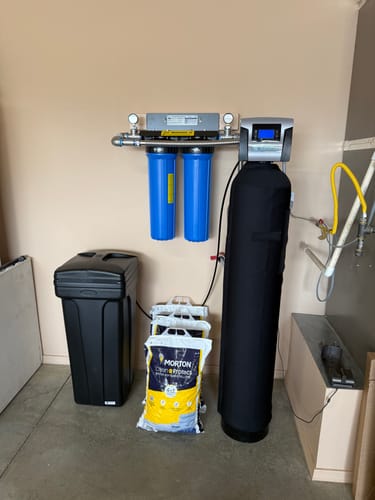
The Iron Master arrived well-packaged with all components clearly labeled and protected. The main tank is substantial - this is definitely not a lightweight consumer appliance. The fiberglass construction feels solid and professional-grade.
**I decided to hire a local plumber for installation rather than attempting it myself.** While the system can be installed by experienced DIYers, the integration with existing plumbing and electrical systems made professional installation worth the cost for me. The total installation time was about four hours, including the bypass valve installation and initial system startup.
The space requirements were exactly as specified - 24 inches by 36 inches floor space with 48 inches of height clearance for the tank. The system needed a 120V electrical connection for the controller and access to a drain for backwash discharge.
**First startup was impressive.** The automatic air injection system began working immediately, and you could actually hear the oxidation process happening in the tank. The initial water coming out was cloudy with oxidized iron particles, but this cleared up within the first hour of operation as the system stabilized.
The control head is intuitive with a digital display showing system status, days until next backwash, and total gallons processed. The programming interface allowed customization of backwash frequency based on our specific water conditions and usage patterns.
What struck me immediately was how quiet the system operates during normal filtration. The only time you notice any noise is during the automatic backwash cycle, which runs for about 12 minutes every three days in our configuration.
**The first glass of water from the tap was a revelation.** No sulfur odor, no metallic taste, and crystal clear appearance. After months of problematic water, having clean, odorless water flowing from our taps felt almost miraculous.
Performance Results: The Numbers Don't Lie
Eight months of operation has given me extensive data on how the Iron Master performs under real-world conditions.
**Water quality improvements exceeded my expectations.** I test our water monthly using both home test kits and periodic laboratory analysis. The incoming water consistently measures 4.2 ppm iron and detectable hydrogen sulfide. Post-filtration, iron levels drop to less than 0.1 ppm - well below the EPA's recommended maximum of 0.3 ppm.
The hydrogen sulfide elimination is complete. Laboratory testing shows non-detect levels after filtration, and more importantly, there's absolutely no sulfur odor in our treated water. The transformation from rotten-egg-smelling water to odorless, clean water happened literally overnight after installation.
**Visual improvements were immediate and dramatic.** Our white bathroom fixtures are actually white again. The black staining that had plagued our sinks, tubs, and toilets disappeared within days as the system eliminated the iron particles that had been causing the discoloration.
Appliance performance has noticeably improved. Our dishwasher no longer leaves spots on glassware, and the coffee maker that had been producing increasingly metallic-tasting coffee is back to brewing proper cups. I've also noticed that soap and detergent seem to work better - likely because they're not competing with dissolved minerals in the water.
**Flow rate performance has been excellent.** Even during peak usage periods - simultaneous shower, dishwasher, and washing machine operation - we maintain consistent pressure throughout the house. The 12 GPM rating proves accurate under real-world conditions.
The system's efficiency is impressive. Backwash cycles consume approximately 150 gallons every three days, which seems reasonable given the volume of water we're processing and the contamination levels we're removing. The automatic controller adjusts backwash frequency based on actual usage, so we're not wasting water on unnecessary cycles.
**Long-term performance has remained consistent.** Unlike our experience with the cheap filter that degraded quickly, the Iron Master's performance eight months in is virtually identical to day one. Monthly testing shows no deterioration in iron or sulfur removal efficiency.
Daily Life Impact and Unexpected Benefits
The transformation in our daily living experience has been more significant than I initially anticipated when I was focused primarily on solving the immediate water problems.
**Guests no longer ask about "that smell" when they visit.** What had become an embarrassing explanation about our water system is now a non-issue. Our house smells like a house again, not like a chemistry experiment gone wrong.
Cleaning has become dramatically easier and more effective. Bathroom fixtures stay clean longer and actually respond to normal cleaning products. Previously, no amount of scrubbing could remove the iron staining, but now a quick weekly cleaning keeps everything spotless.
**Laundry improvements were an unexpected bonus.** White clothes are staying white instead of developing the grayish tinge they'd acquired from iron-contaminated water. Colored fabrics seem brighter and last longer without the mineral stress they were experiencing before.
Personal hygiene has improved noticeably. Hair feels softer and more manageable without the iron minerals coating each strand. Skin doesn't have that dry, tight feeling after showers that we'd grown accustomed to over the years.
**Our water heater is operating more efficiently.** Without iron particles settling in the tank and coating the heating elements, the unit heats water faster and more consistently. I expect this will extend the water heater's lifespan significantly.
Kitchen activities are more pleasant. Cooking with water that tastes like water rather than metal has improved everything from coffee and tea to pasta and soups. Ice cubes are crystal clear instead of cloudy with mineral deposits.
**Even our pets seem to prefer the treated water.** Our dog, who had become increasingly reluctant to drink from his water bowl, now drinks normally. Animals are often more sensitive to water taste and odor than humans realize.
The psychological relief of having a permanent solution to our water problems cannot be overstated. After months of worrying about water quality, dealing with stained fixtures, and being embarrassed about our home's odor, having consistently clean water has been genuinely life-changing.
Honest Assessment: What Could Be Better
While my overall experience with the Iron Master has been overwhelmingly positive, eight months of ownership has revealed some areas where the system could be improved.
**The initial water waste during startup was more than expected.** The first few days after installation required running taps frequently to clear residual particles from the system. This isn't unusual for iron filtration systems, but it would have been helpful to have clearer guidance on what to expect during the break-in period.
Occasional breakthrough days do happen, as mentioned in the original review that led me to research this system. Perhaps once every 6-8 weeks, I notice a slight return of odor and some particles in the water. These episodes last 12-24 hours and resolve on their own, likely as the system self-adjusts through its backwash cycles.
**The backwash cycle timing isn't always convenient.** While the automatic scheduling is generally efficient, the system occasionally initiates backwash during peak usage periods. The controller allows manual delay, but this requires intervention that somewhat defeats the purpose of automatic operation.
Space requirements might be challenging for some installations. The system footprint is substantial, and the clearance needed for maintenance access means it won't fit in every utility room or basement location. Measure twice, install once definitely applies here.
**The digital controller, while functional, could be more intuitive.** Programming backwash schedules and adjusting settings requires consulting the manual. It's not complicated, but it's not as user-friendly as some modern appliance interfaces.
Seasonal variations in water quality seem to affect system performance slightly. During spring runoff periods, our well water tends to have higher iron concentrations, and the system works harder to maintain the same output quality. This isn't a fault of the equipment, but it's worth noting that well water isn't always consistent.
**None of these issues are deal-breakers,** but they represent the real-world experience of living with this system rather than just the highlight reel. For anyone considering this investment, it's important to understand that even excellent water treatment equipment requires some accommodation in terms of space, maintenance, and occasional minor inconveniences.