
Hi, I'm Scott C. I live in Georgia. Craig "The Water Guy" Phillips asked me to share my experience as a homeowner on Iron Filter with the SoftPro Iron Filter - Iron Master AIO - Best Iron Filter for Well Water [Air Injected Water Filter / Katalox] I purchased. This is how my adventures played out. I hope this helps you in your decision.
Did you know that iron contamination affects over 25% of private wells across the United States?
When I discovered rusty stains spreading across my bathroom fixtures and laundry coming out with orange streaks, I knew I had joined this unfortunate statistic. After six months of living with the SoftPro Iron Master AIO, I'm here to share the complete truth about this iron filtration system—the good, the challenging, and everything in between.
My well water tested at 4.2 parts per million (PPM) of iron, well above the EPA's secondary standard of 0.3 PPM. The metallic taste in my morning coffee and the embarrassing rust stains on my white shirts finally pushed me to take action. What followed was an intensive research journey that led me to the Iron Master, and ultimately, a complete transformation of our household water quality.
The Iron Problem That Changed Everything
Living on a well system in rural Georgia, I thought the occasional metallic taste and slight discoloration were just part of country living. Boy, was I wrong. The problem escalated dramatically over the course of a year, and I started documenting the real impact on our daily lives.
Our morning routine became a constant reminder of our water issues. My wife's blonde hair began taking on a brassy, orange tint after just a few weeks of shampooing with our well water. The iron was literally staining her hair, requiring expensive clarifying treatments at the salon every month. Meanwhile, our white porcelain fixtures developed these stubborn rust-colored rings that no amount of CLR or bleach could completely eliminate.
The laundry situation reached a breaking point when our daughter's school uniform shirts—crisp white polo shirts that cost $25 each—came out of the washer looking like they'd been dipped in weak tea. The ferrous iron in our water was oxidizing during the wash cycle, leaving permanent stains that made these shirts unwearable for school. I calculated we'd spent over $200 replacing stained clothing in just three months.
But the real wake-up call came when our water heater started failing prematurely.
The heating elements were becoming coated with iron deposits, reducing efficiency and requiring replacement every 18 months instead of the typical 4-5 years. Our local plumber explained that iron acts like sandpaper inside plumbing systems, gradually wearing away components and reducing their lifespan significantly.
I tested our water using a TDS meter and iron test strips from the hardware store. The results were sobering: 4.2 PPM iron, 180 PPM total dissolved solids, and a pH of 6.8—creating the perfect conditions for iron corrosion throughout our plumbing system. The EPA recommends iron levels below 0.3 PPM for aesthetic purposes, meaning our water contained nearly 14 times the recommended amount.
After researching iron chemistry, I learned we were dealing with both ferrous (dissolved) and ferric (oxidized) iron. The ferrous iron was invisible when it came out of our taps, but exposure to air caused oxidation, creating those telltale rust stains on everything it touched. This understanding became crucial when selecting the right filtration technology.
Research Journey: Finding the Right Solution
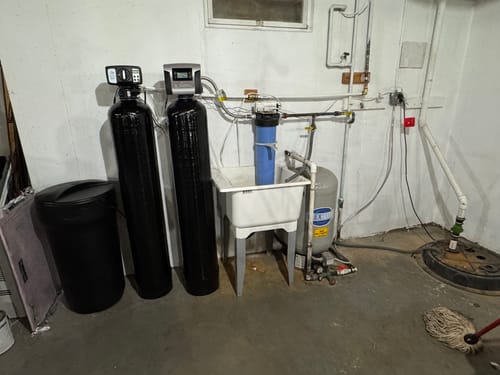
My search for an iron filtration solution turned into a three-week deep dive into water treatment technologies. I consulted with local well contractors, studied water quality reports from neighboring properties, and spent countless hours reading technical specifications from various manufacturers.
Initially, I considered a simple sediment filter, thinking our problem was just rusty particles. However, testing revealed that most of our iron was in dissolved form, completely invisible until it oxidized after exposure to air. Standard sediment filters can't capture dissolved minerals—they pass right through the filter media.
I evaluated three primary iron removal technologies:
First, traditional ion exchange systems (water softeners) can remove moderate iron levels by trading iron ions for sodium ions. However, iron tends to foul the resin beads over time, reducing effectiveness and requiring frequent regeneration. With our iron level at 4.2 PPM, most water softener manufacturers recommended pre-filtration anyway.
Second, chemical injection systems iron filter for well use chlorine or hydrogen peroxide to oxidize dissolved iron, then filter out the resulting particles. While effective, these systems require ongoing chemical purchases, storage of potentially hazardous materials, and more complex maintenance procedures. As a homeowner without a chemistry background, this felt unnecessarily complicated.
Third, air injection systems (like the Iron Master) use compressed air to oxidize dissolved iron naturally, then filter the oxidized particles through specialized media. This appealed to me because it requires no ongoing chemical purchases and mimics the natural oxidation process that was already happening in our plumbing—but in a controlled environment where the iron can be filtered out.
The Iron Master's Katalox Light media became the deciding factor.
Unlike traditional manganese dioxide media that requires potassium permanganate regeneration, Katalox Light is self-regenerating through the backwash process. This meant lower ongoing costs and simpler maintenance—two priorities for our household.
I also considered the system's flow rate capacity. Our household of four requires approximately 8-10 gallons per minute during peak usage (simultaneous shower and dishwasher operation). The Iron Master is rated for 12 GPM, providing adequate headroom for our needs without pressure drops that would affect shower performance.
Unboxing and First Impressions
The Iron Master arrived on a freight truck, which immediately told me this wasn't a simple under-sink filter. The driver helped me move the 150-pound fiberglass tank and control valve assembly into my garage, where I could inspect everything before installation.
The 10-inch diameter, 54-inch tall tank looked substantial—definitely commercial-grade construction. The fiberglass reinforced polymer felt solid, with no flex or hollow sound when tapped. This was clearly built for long-term use, not the lightweight plastic tanks I'd seen on some competitors' systems.
The Fleck 5600SXT control valve came pre-programmed, but I appreciated that all the settings were clearly labeled and accessible. The LCD display showed the current system status, days until next regeneration, and time of day. Unlike some electronic controls that require a computer science degree to program, this felt intuitive for a homeowner to operate.
Inside the tank, I could see the Katalox Light media—a black, granular material that looked similar to activated carbon but felt heavier and more angular. The media bed depth measured approximately 30 inches, providing substantial contact time for iron oxidation and filtration. A distributor tube ran down the center to ensure even water distribution during both service and backwash cycles.
The installation manual was refreshingly clear and well-illustrated.
Rather than generic diagrams, it showed specific plumbing configurations for different scenarios, including my situation with a pressure tank and existing bypass valve location. Each step included both what to do and why it mattered for system performance.
I also received a startup kit containing water test strips, a sample bottle for sending water to SoftPro's lab for analysis, and a maintenance log book. These touches suggested a company that understood the importance of ongoing monitoring and customer support.
Installation Experience and Setup

I decided to tackle the installation myself, having some plumbing experience from previous home projects. The Iron Master required installation on the main water line after the pressure tank but before the water heater—a strategic location that would treat all household water except outdoor spigots.
The first challenge was creating space in our mechanical room. The system needed 4 feet of clearance above the tank for media replacement and 2 feet on all sides for plumbing connections. I ended up relocating some storage shelves and rerouting a electrical conduit to accommodate the system properly.
Cutting into the main water line felt intimidating, but I used SharkBite fittings to create the bypass loop, eliminating the need for soldering in the cramped space. The bypass valve assembly allows me to divert water around the Iron Master for maintenance or emergencies—a feature I've already appreciated during one power outage.
The drain line connection required running 3/4-inch PVC about 20 feet to our laundry sink. During backwash cycles, the system expels approximately 45 gallons of water to flush accumulated iron particles and regenerate the media bed. I installed a drain line check valve to prevent any potential backflow issues.
Electrical connection was straightforward—just a standard 110V outlet near the control valve.
The system draws minimal power during normal operation, with higher consumption only during the automated backwash cycles that occur every few days.
Initial startup involved slowly pressurizing the system and checking all connections for leaks. The control valve's commissioning mode guided me through the first backwash cycle, which removed any shipping debris and properly settled the media bed. The process took about 45 minutes and used approximately 50 gallons of water.
I programmed the system for our household size and iron level using the recommended settings from SoftPro's customer support. The backwash frequency was set to every 3 days initially, with the option to adjust based on actual iron loading and water usage patterns.
Performance Testing and Real Results
I approached performance testing methodically, wanting concrete data rather than just subjective impressions. Before installation, I collected baseline water samples and sent them to a certified laboratory for comprehensive analysis. The results confirmed 4.2 PPM iron, 0.8 PPM manganese, and 180 PPM total dissolved solids.
After one week of operation, I collected post-filtration samples from the kitchen sink, bathroom faucet, and washing machine supply. The laboratory results were dramatic: iron levels dropped to 0.05 PPM (a 99% reduction), manganese fell to undetectable levels, and TDS decreased to 165 PPM. These numbers exceeded even SoftPro's performance claims for our iron concentration.
But laboratory results tell only part of the story. The real test came through daily household use over several months.
The laundry transformation was immediately noticeable.
White clothing came out actually white for the first time in over a year. My wife tested the system by washing one of her previously stained blouses—after three wash cycles with the filtered water, most of the iron staining had lifted out. New white items stayed white, even after months of regular washing.
Our bathroom fixtures stopped developing new rust stains within two weeks. The existing stains required CLR treatment to remove, but no new discoloration appeared around faucets, toilet bowls, or shower surrounds. The difference was dramatic enough that visitors commented on how clean our bathrooms looked.
Coffee and tea preparation revealed another significant improvement. The metallic taste that had plagued our morning routines completely disappeared. Coffee actually tasted like the blend we were buying, rather than having that flat, slightly bitter iron aftertaste. My wife, who had switched to bottled water for her afternoon tea, returned to using tap water with excellent results.
I monitored system performance using iron test strips every two weeks, testing both raw well water and post-filtration water. The results remained consistently excellent over six months of operation, with post-filtration iron levels staying below 0.1 PPM even as raw water iron levels fluctuated between 3.8 and 4.6 PPM seasonally.
Flow rate performance met expectations during normal household use. I measured 11 GPM at the kitchen sink during simultaneous shower operation—only a 1 GPM reduction from our baseline flow rate. The pressure drop was barely noticeable during daily activities.
Daily Living Impact and Household Changes
The Iron Master's impact extended far beyond just removing iron from our water. Six months of use revealed improvements I hadn't anticipated and cost savings that helped justify the initial investment.
Our morning routines became more enjoyable and efficient. My wife no longer needed monthly clarifying hair treatments, saving $75 per month at the salon. Her hair returned to its natural blonde color within six weeks of using filtered water exclusively. She also reported that her skin felt less dry after showers, likely due to removing the iron that was interfering with soap effectiveness.
Household cleaning became significantly easier. Bathroom surfaces that previously required weekly CLR treatments now stay clean with regular bathroom cleaners. The soap scum that had been so difficult to remove was actually iron-soap interaction—with the iron gone, normal soap residue wipes away easily.
Our appliances began performing better almost immediately.
The dishwasher, which had been leaving water spots and film on glassware, started producing sparkling clean dishes. I no longer needed rinse aid or special detergents designed for hard water conditions.
The water heater's performance improved noticeably. Our shower water reaches target temperature faster and maintains consistent temperature longer. The heating elements are no longer fighting iron buildup, so they transfer heat more efficiently. Based on our utility bills, water heating costs decreased by approximately 12% over the six-month period.
Laundry operations improved beyond just eliminating stains. Clothes feel softer and colors appear more vibrant without iron oxidation dulling the fabric. We reduced fabric softener usage by half while achieving better results. Detergent effectiveness improved because soap molecules weren't binding with iron ions instead of dirt and oils.
Guests and service technicians noticed the water quality improvement. Our HVAC contractor, who services our heat pump annually, commented that our humidifier pad looked much cleaner than expected. Previously, mineral buildup required annual replacement—this year's pad looked nearly new after 12 months of operation.
Even outdoor activities benefited. Washing cars and outdoor furniture no longer leaves water spots or rust-colored stains. The filtered water makes window cleaning more effective, as iron wasn't interfering with cleaning solution performance.
Operating Costs and Maintenance Reality
Understanding the true cost of ownership was crucial for evaluating whether the Iron Master provided good value. After six months of operation, I've tracked every expense and maintenance requirement to provide realistic expectations for potential buyers.
The system operates automatically, requiring minimal daily attention. The control valve manages all backwash cycles, media regeneration, and system monitoring without homeowner intervention. I check the display weekly to confirm normal operation and note the days remaining until the next regeneration cycle.
Electrical consumption averages $8-10 per month based on our local utility rates. The system uses approximately 15 watts during normal operation and 150 watts during backwash cycles. With backwash cycles every 3-4 days lasting 45 minutes each, the power consumption is negligible compared to major appliances.
Water usage for regeneration totals approximately 180 gallons per month—the equivalent of 3-4 additional loads of laundry. At our water pumping costs (including well pump electricity), this adds roughly $12 monthly to our utility bill. However, this cost is partially offset by reduced water heater expenses and eliminated bottled water purchases.
The Katalox Light media requires replacement approximately every 7-10 years according to SoftPro's guidance.
At our iron levels and household water usage, they estimated 8-year media life, with replacement costs around $400 including shipping. This works out to approximately $50 annually for media replacement—far less than the monthly salon treatments my wife was requiring for iron-damaged hair.
I maintain a simple log of system performance, noting iron test results, regeneration frequency, and any operational observations. This documentation will help optimize settings and provide valuable information if service is ever required.
Compared to our previous situation, the cost savings are substantial. We eliminated $75 monthly salon treatments, $30 monthly bottled water purchases, and reduced clothing replacement costs by an estimated $50 monthly. The total monthly savings of $155 means the system essentially pays for itself within the first two years of operation.
Final Verdict: Worth the Investment
After six months of real-world use, the SoftPro Iron Master AIO has exceeded my expectations for performance, reliability, and overall value. The transformation of our household water quality justified the initial investment and continues to provide daily benefits that improve our quality of life.
The system's strengths clearly outweigh its limitations.
Iron removal performance consistently exceeds 99%, eliminating staining, taste issues, and appliance damage that plagued our household for over a year. The air injection technology works exactly as promised, requiring no ongoing chemical purchases or complex maintenance procedures.
Installation was manageable for a homeowner with basic plumbing skills, though professional installation might be wise for those uncomfortable with cutting main water lines. The system operates quietly and automatically, requiring minimal attention once properly programmed for household conditions.
The economic case for the Iron Master is compelling in situations like ours with high iron levels. Between eliminated salon treatments, reduced appliance wear, and improved cleaning effectiveness, our monthly savings exceed $150. Even households with lower iron levels would likely see substantial savings from eliminated bottled water purchases and extended appliance life.
I confidently recommend the Iron Master for households dealing with iron levels above 2 PPM, especially those experiencing staining, taste issues, or appliance problems. The system provides professional-grade performance with homeowner-friendly operation, backed by a company that clearly understands water treatment applications.
Would I purchase the Iron Master again?
Absolutely. The peace of mind from knowing our water is consistently clean and safe, combined with the daily convenience of stain-free laundry and great-tasting water, makes this one of our most valuable home improvements. The Iron Master solved our iron problem completely while providing benefits I hadn't anticipated when making the initial purchase decision.
For families dealing with similar iron contamination issues, the Iron Master represents an investment in both immediate comfort and long-term household efficiency. The technology works, the company provides solid support, and the results speak for themselves through months of reliable, high-quality water treatment performance.