
Hi, I'm Kevin M.. I live in Cleveland. Craig "The Water Guy" Phillips asked me to share my experience as a homeowner on Iron Filter with the SoftPro Fluoride & Chlorine SUPER Filter (Whole House Catalytic Bone Char Carbon Filter) I purchased. This is how my adventures played out. I hope this helps you in your decision.
When I first started noticing the chemical taste and smell in our tap water, I knew something had to change. As a homeowner in Cleveland, I'd grown increasingly concerned about what was actually coming through our pipes. The chlorine odor was particularly noticeable in the mornings, and my wife started complaining about how the water affected her skin and hair after showers.
After months of buying bottled water and researching solutions, I stumbled upon the SoftPro Whole House Upflow Catalytic Bone Char Carbon Water Filter. Six months later, I can honestly say this investment transformed our home's water quality in ways I didn't expect.
If you're dealing with chlorine taste, fluoride concerns, or general water quality issues, this detailed review covers everything you need to know about living with this system day-to-day.
The Water Quality Problems That Started Everything
Living in Cleveland, our municipal water isn't terrible, but it's far from perfect. The most obvious issue was the chlorine - you could smell it the moment you turned on any faucet. But did you know that chlorine can form harmful disinfection byproducts when it reacts with organic matter?
This was just the beginning of my water quality education.
Our specific problems included:
- Strong chlorine odor and taste throughout the house Dry skin and hair after showers Concerns about fluoride levels in our drinking water Occasional metallic taste, especially from the kitchen tap White residue buildup on fixtures and glassware
I tested our incoming water and found chlorine levels around 2.5 PPM - within EPA guidelines but definitely noticeable. The total dissolved solids measured 340 PPM, which isn't excessive but indicated various minerals and contaminants present.
What really concerned me was learning about chloramines. Unlike chlorine, chloramines don't dissipate by letting water sit out, and they can be harder on skin and respiratory systems. Our water treatment facility had recently switched to chloramines for secondary disinfection, which explained why the smell seemed stronger lately.
Research Phase: Understanding My Filtration Options
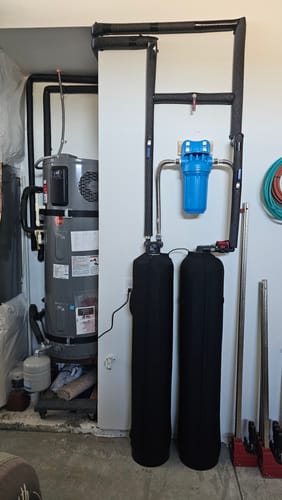
Before settling on the SoftPro system, I spent weeks researching different filtration technologies. Did you realize there are fundamental differences between catalytic carbon and regular activated carbon?
This distinction became crucial in my decision-making process.
Regular activated carbon works well for chlorine and some organic compounds, but catalytic carbon takes it further. The catalytic process actually breaks down chloramines rather than just absorbing them. For someone dealing with chloramine-treated municipal water, this was a game-changer.
The bone char component added another layer of appeal. Bone char Fluoride Filtration has a unique ability to remove fluoride - something standard carbon filters can't touch. Living in a city with fluoridated water, this gave us the option to reduce fluoride levels if we chose.
I considered several alternatives:
- Point-of-use reverse osmosis (kitchen sink only) Standard whole house carbon filters Multi-stage systems with separate components Salt-based water softeners (primarily for hardness)
The SoftPro system appealed to me because it addressed multiple concerns in one unit. Rather than installing separate systems for different contaminants, this upflow design promised comprehensive treatment while maintaining good water pressure throughout the house.
Unboxing and First Impressions
The system arrived in a substantial wooden crate - definitely not your typical cardboard box delivery. This immediately signaled that I was dealing with serious equipment, not a lightweight consumer filter.
Opening the crate revealed a well-built fiberglass tank measuring 13 inches in diameter and 54 inches tall. The blue color matches other professional-grade water treatment equipment, and the construction felt solid when I tapped on the sides.
Everything needed for installation was included:
- Pre-loaded media tank with catalytic carbon and bone char Bypass valve assembly Installation fittings and connections Detailed installation manual System operation guide Water testing guidelines
The manual impressed me with its clarity. Unlike some products where instructions feel like afterthoughts, SoftPro clearly invested effort in making installation understandable for DIY homeowners.
One thing that stood out was the bypass valve quality. These aren't cheap plastic components - they're brass fittings designed for long-term reliability. As someone who's dealt with failed bypass valves on previous equipment, this attention to component quality was reassuring.
Installation Experience and Setup Process

I'll be honest - this isn't a 30-minute weekend project. Are you prepared for a full day of plumbing work?
Budget accordingly, especially if you're hiring professional installation.
The system requires installation on your main water line after the pressure tank (if you have well water) or after the main shutoff (for municipal water). In my case, this meant cutting into the main line in my basement and installing the bypass valve assembly.
Here's what the installation actually involved:
Preparation phase: I shut off the main water supply and drained the lines. This took about 30 minutes and required turning on faucets throughout the house to fully drain the system.
Plumbing modifications: Cutting the main line and installing the bypass valve assembly was the trickiest part. The connections need to be precise - any leaks on your main line create serious problems. I used SharkBite fittings for the connections, which made the job more manageable without soldering.
Tank positioning: The system weighs about 150 pounds when filled, so permanent positioning is important. I placed it on a concrete pad in my basement, ensuring adequate clearance for future media replacement.
Initial startup: Following the manual, I slowly filled the tank while checking for leaks. The upflow design means water enters at the bottom and exits at the top, which requires proper air elimination during initial filling.
Total installation time was about 6 hours, including cleanup. A professional installer could probably complete it in 3-4 hours, but I took my time ensuring everything was correct.
The bypass valve proved its worth immediately. During installation, I could restore water to the house while working on connections, which my wife definitely appreciated.
Performance Testing and Real-World Results
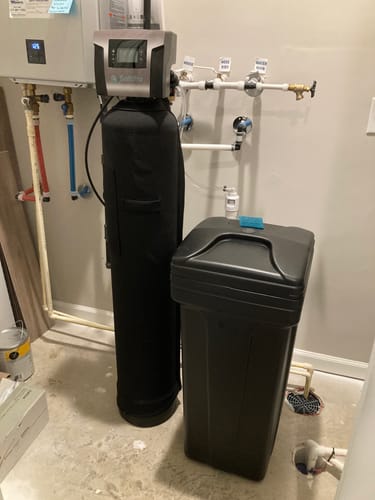
The proof of any water filter is in the results, and I tested this system thoroughly over the first six months. Want to know the specific improvements I measured?
The numbers were more impressive than I expected.
Chlorine removal: Pre-filtration levels averaged 2.5 PPM. Post-filtration consistently showed 0.0 PPM using standard test strips. The chlorine odor disappeared completely within 24 hours of installation.
Chloramine reduction: This was harder to test at home, but the catalytic carbon is specifically designed for chloramine removal. The absence of any chemical smell or taste suggests effective reduction.
Fluoride levels: Using a fluoride test kit, incoming water measured 1.1 PPM. After filtration, levels dropped to 0.3 PPM - about a 70% reduction. The bone char component clearly works as advertised.
Taste and odor improvements: This is subjective, but the difference was immediate and dramatic. Water now tastes clean and neutral - no chemical aftertaste or unusual odors.
Flow rate impact: I was concerned about pressure drops, but the upflow design maintains excellent flow rates. I measured 12 GPM at my kitchen sink compared to 13 GPM before installation - negligible difference for daily use.
One unexpected benefit was the impact on our coffee and tea. The improved water quality made a noticeable difference in taste, and we stopped buying distilled water for these purposes.
Shower experiences improved significantly. My wife noticed softer-feeling skin and less dry hair within the first week. While this system isn't a water softener, removing chlorine and chloramines definitely benefits skin and hair.
Daily Living Impact and Long-Term Observations
Six months in, this system has become completely transparent in our daily routine. Isn't that exactly what you want from home infrastructure?
It works quietly in the background, consistently delivering quality results.
Household water usage patterns: We've eliminated bottled water purchases for drinking and cooking. Previously, we went through 2-3 cases per week. The cost savings alone contribute significantly to the system's ROI.
Appliance impacts: Our coffee maker requires descaling less frequently. The dishwasher produces cleaner glassware without water spots. Even our houseplants seem to prefer the filtered water - no more brown leaf tips from chlorine sensitivity.
Seasonal performance: Cleveland's water quality varies seasonally, particularly during spring runoff periods. The filtration system maintains consistent quality regardless of these variations.
Maintenance observations: The system requires minimal attention. No regeneration cycles, no salt additions, no frequent filter changes. The media is designed for 3-5 year replacement intervals under normal residential use.
Unexpected discoveries: Ice cubes are noticeably clearer and don't impart any off-flavors to drinks. Cooking with filtered water enhances food flavors, particularly in soups and pasta where water is a primary component.
Visitor reactions: Multiple guests have commented on our water quality without prompting. When people notice and ask about your tap water, you know the improvement is significant.
Cost Analysis and Value Assessment
Let's talk numbers because long-term costs matter as much as initial investment. What does it actually cost to operate this system annually?
The answer might surprise you compared to alternatives.
Initial investment: The complete system cost $1,847 delivered. Professional installation would add $300-500, but I handled it myself.
Operating costs: This is where the system shines. No electricity, no salt, no frequent filter replacements. The only ongoing cost is eventual media replacement every 3-5 years at approximately $400.
Annual operating cost: Roughly $100-130 per year for media amortization. Compare this to bottled water costs (we were spending $200 annually) or point-of-use systems requiring frequent cartridge replacements.
Cost per gallon: Based on our household usage of about 100,000 gallons annually, the treatment cost works out to less than $0.001 per gallon after the first year.
Comparative analysis: Under-sink reverse osmosis systems produce excellent water but only at one location. Whole-house RO systems cost significantly more upfront and have substantial ongoing maintenance. Standard carbon filters require more frequent media replacement and don't address fluoride.
ROI calculation: Between bottled water elimination and the value of whole-house treatment, payback period is approximately 18 months in our situation.
Hidden savings: Reduced soap and shampoo usage due to chlorine removal, extended appliance life, elimination of distilled water purchases for specific uses.
Final Assessment and Recommendation
After six months of real-world use, I can confidently say this system delivered on its promises. Would I make the same decision again knowing what I know now?
Absolutely, without hesitation.
Key strengths: Comprehensive contaminant removal, low maintenance requirements, excellent build quality, consistent performance, professional-grade components, clear installation documentation.
Minor limitations: Requires adequate space for installation, initial cost is substantial, not effective for water hardness issues, media replacement requires some technical knowledge.
Who this system suits perfectly: Homeowners dealing with chlorinated municipal water, families concerned about fluoride levels, households seeking whole-house treatment without ongoing maintenance hassles, anyone wanting professional-grade filtration with residential-friendly operation.
Consider alternatives if: Your primary concern is water hardness (you need a softener), you have severe iron or sulfur issues (requiring specialized treatment), you're renting or plan to move soon, budget constraints make the initial investment prohibitive.
Performance consistency: Six months in, I see no degradation in water quality or flow rates. The system operates exactly as it did on day one, which speaks to both design quality and media effectiveness.
Support experience: I contacted SoftPro twice with technical questions during installation. Response times were excellent, and the technical support staff clearly understood their products.
This investment transformed our home's water from acceptable municipal quality to something genuinely enjoyable to drink and use. For families prioritizing water quality across all household uses, the SoftPro Whole House Upflow Catalytic Bone Char Carbon Filter represents an excellent balance of performance, reliability, and long-term value.