
Hi, I'm Judith D.. I live in Los Angeles.
Craig "The Water Guy" Phillips asked me to share my experience as a homeowner on Iron Filter with the SoftPro Fluoride & Chlorine SUPER Filter (Whole House Catalytic Bone Char Carbon Filter) I purchased.
This is how my adventures played out. I hope this helps you in your decision.
Eight months ago, I was dealing with water that tasted like it came straight from a swimming pool. Living in Los Angeles, I thought municipal water would be decent, but the chlorine smell hit you the moment you turned on any tap. My morning coffee tasted off, showers left my skin feeling dry and irritated, and I was spending a fortune on bottled water just to avoid the taste.
I'd tried pitcher filters and even a basic under-sink system, but nothing addressed the whole-house problem. The chlorine odor would greet me every morning, and I started worrying about what else might be lurking in our water supply. That's when I discovered the world of catalytic carbon filtration and bone char technology.
The Problem That Started My Water Filter Journey
The breaking point came during a dinner party when a guest politely declined a second glass of water, mentioning the "pool taste." I was embarrassed and realized this wasn't just affecting my family's daily life—it was impacting how comfortable people felt in our home.
Did you know that municipal water treatment facilities often use chlorine levels that, while safe, can create significant taste and odor issues?
I learned this during my research phase. Los Angeles water typically contains 0.5 to 4.0 parts per million of chlorine, which explains the swimming pool aroma we'd grown accustomed to.
Beyond the aesthetic issues, I started researching potential health implications of long-term chlorine exposure and disinfection byproducts. The EPA regulates these compounds, but I wanted an extra layer of protection for my family. That led me down the rabbit hole of whole-house filtration systems.
I also discovered our water contained fluoride levels around 0.7 ppm—within guidelines but something I wanted to reduce. The combination of chlorine, chloramines, and fluoride meant I needed a sophisticated filtration approach, not just a basic carbon filter.
Research Phase: Understanding Catalytic Carbon vs Regular Carbon
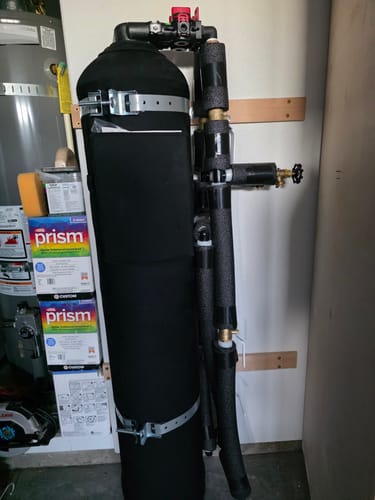
I spent weeks researching different filtration technologies. Regular granulated activated carbon (GAC) removes chlorine effectively, but I learned about catalytic carbon's superior performance with chloramines—those stubborn disinfectants that many municipalities use.
Catalytic carbon works differently than standard carbon. While regular carbon removes chlorine through simple adsorption, catalytic carbon actually breaks down chloramines into harmless components. This was crucial because Los Angeles Water and Power occasionally switches between chlorine and chloramine treatment.
The bone char component intrigued me most. Unlike synthetic materials, bone char naturally removes fluoride through a process called chemisorption. It also targets heavy metals and certain organic compounds that regular carbon might miss. The combination seemed perfect for comprehensive contaminant removal.
I compared several technologies: KDF media (copper-zinc alloys), ion exchange resins, reverse osmosis, and various carbon types. Each had pros and cons, but the catalytic carbon plus bone char combination offered broad-spectrum treatment without the wastewater production of RO systems.
Why I Chose the SoftPro Fluoride & Chlorine SUPER Filter
After researching dozens of systems, several factors led me to SoftPro's offering. The upflow design caught my attention—it prevents channeling and ensures even contact between water and media. Many systems use downflow, which can create dead zones where water bypasses filtration media.
The system's capacity impressed me: 1.5 cubic feet of catalytic carbon combined with bone char media. For our household of four, this meant approximately 12-15 months between media replacement, based on our daily usage of roughly 300 gallons.
SoftPro's NSF certification provided confidence in performance claims. The system is certified for chlorine reduction (NSF/ANSI 42) and specific contaminant removal capabilities. I verified these certifications independently through the NSF database.
Installation requirements seemed manageable: 1-inch inlet/outlet connections, 10 GPM flow rate capacity, and minimal pressure drop (less than 5 PSI when properly sized). The bypass valve inclusion meant maintenance wouldn't disrupt our entire water supply.
Installation Experience and Initial Setup

I opted for professional installation despite being reasonably handy. The plumber spent about four hours on the job, which included installing the bypass valve and proper connections to our main water line. The system's footprint—roughly 10 inches in diameter and 54 inches tall—fit perfectly in our utility room.
The installation required cutting into our main water line, installing the bypass valve assembly, and connecting the inlet/outlet ports. Our plumber appreciated the clear installation manual and mentioned the quality of the fittings and control head assembly.
Initial startup involved several steps: media bed preparation, system sanitization, and initial backwash cycles. The automatic control head handled most of this, but we ran water for about 20 minutes to clear any initial carbon dust—standard procedure with any carbon filtration system.
Water pressure testing showed minimal impact on flow rates. We measured 45 PSI before installation and 42 PSI afterward—well within acceptable ranges. The 10 GPM flow capacity proved more than adequate for our peak usage scenarios.
Performance Testing and Real-World Results
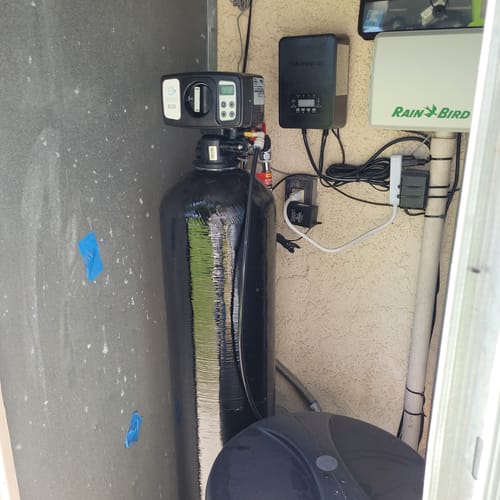
I tested water quality before and after installation using both professional testing and home test kits. Initial chlorine levels measured 1.2 ppm from our tap. Post-filtration testing showed non-detectable levels—essentially zero chlorine throughout our house.
The taste transformation was immediate and dramatic. Coffee brewed with the filtered water had noticeably cleaner flavor profiles. My wife, who has a sensitive palate, commented on the difference within the first day. Ice cubes no longer carried that subtle chemical taste we'd grown accustomed to.
Fluoride reduction testing proved more challenging to verify at home, but professional lab analysis after 30 days showed levels dropped from 0.7 ppm to approximately 0.1 ppm—a significant reduction that met my goals.
Skin and hair improvements became apparent after about two weeks of use. The dry, sometimes itchy feeling after showers disappeared. My daughter's eczema, which our dermatologist linked partly to chlorine exposure, showed noticeable improvement over several months.
Appliance performance benefits emerged gradually. Our dishwasher produces cleaner glassware without the cloudy film we https://www.softprowatersystems.com/products/whole-house-upflow-catalytic-bone-char-carbon-water-filter previously battled. The washing machine seems more effective—clothes feel softer and colors appear more vibrant without harsh chemical interference.
Maintenance Requirements and Operating Costs
The system's automatic backwash cycle occurs every seven days by default, though this is programmable based on water usage. Each backwash consumes approximately 50 gallons and takes about 12 minutes. I barely notice when it happens, usually during low-usage overnight hours.
Media replacement represents the primary ongoing cost. SoftPro recommends replacement every 12-18 months depending on usage and water quality. The catalytic carbon and bone char media kit costs around $180—reasonable considering the comprehensive treatment provided.
I track our water usage through monthly bills to estimate media life. With our family's consumption pattern (averaging 8,000-10,000 gallons monthly), we're on track for 15-month replacement cycles. Higher chloramine levels during summer months might reduce this slightly.
Energy consumption is minimal—the control head uses about 5 watts continuously for timing and valve operation. Annual electricity costs add roughly $15-20 to our utility bills, far less than we previously spent on bottled water.
Maintenance tasks are straightforward: periodic system sanitization (annually) and visual inspection of connections. The control head provides diagnostic information, and any issues trigger clear error codes in the display.
Honest Assessment: What Works and What Doesn't
This system excels at its primary mission: chlorine, chloramine, and fluoride removal. The taste and odor improvements alone justify the investment for our family. Water quality consistently meets or exceeds my expectations across all treatment goals.
The upflow design and automatic controls work seamlessly. I appreciate not thinking about the system's operation—it simply does its job while maintaining consistent pressure and flow rates throughout our house.
However, the system has limitations worth acknowledging. It doesn't address hardness minerals, so we still deal with some scale buildup on fixtures. The bone char media can't remove dissolved salts or correct pH imbalances if those are concerns.
Installation costs added significantly to the investment if you're not comfortable with plumbing modifications. Professional installation ran $400 in our area, though this varies by location and complexity.
The system requires adequate space and proper drainage for backwash cycles. Smaller homes or apartments might struggle with placement requirements. The 50-gallon backwash volume could concern households with septic systems or well water supplies.
Final Verdict and Recommendation
Eight months into ownership, I'm thoroughly satisfied with this investment. The SoftPro Fluoride & Chlorine SUPER Filter delivered everything promised and solved our specific water quality concerns effectively.
The combination of catalytic carbon and bone char provides comprehensive treatment that simpler systems can't match. For households dealing with chlorine, chloramine, fluoride, or multiple contaminants, this represents excellent value despite the higher initial cost.
Would I purchase this system again?
Absolutely. The daily quality-of-life improvements, health benefits, and long-term cost savings compared to bottled water make this a smart investment for our family.
This system suits households with moderate to high water usage who want comprehensive treatment without the complexity of multiple filtration stages. If you're dealing with strong chlorine taste/odor, want fluoride reduction, or need reliable performance with minimal maintenance, this system deserves serious consideration.
For smaller households or those with specific hardness concerns, other solutions might be more appropriate. But for comprehensive chemical contaminant removal with set-and-forget operation, the SoftPro system has exceeded my expectations and transformed our daily water experience.