
Hi, I'm Marcel Keil. I live in Texas. Craig "The Water Guy" Phillips asked me to share my homeowner experience with local tap water from the city and the SoftPro ECO™ City Water Softener - Best Water Softener Systems for City Water I purchased. This is how my adventures played out. I hope this helps you in your decision.
Why I Finally Had to Do Something About Our Hard Water Problem
Did you know that over 85% of American homes deal with hard water issues?
I certainly found that out the hard way after moving to our current home in Texas eighteen months ago. What started as minor annoyances quickly became daily frustrations that were costing us real money.
The first sign something was wrong came during my morning coffee routine. I'm particular about my coffee, and I noticed this metallic, slightly bitter aftertaste that wasn't there with our previous city water. Initially, I blamed the new coffee maker, but even switching brands and brewing methods couldn't eliminate that off-putting flavor.
Then came the visual evidence. White, chalky spots began appearing on every glass surface in our kitchen. Our shower doors developed this stubborn film that regular cleaning couldn't touch. I'd spend Saturday mornings scrubbing with various cleaners, only to see the same buildup return within days.
But the real wake-up call came when our water heater started making strange popping and crackling sounds during heating cycles. A technician explained that mineral buildup was creating hot spots on the heating elements, reducing efficiency and potentially shortening the unit's lifespan. He estimated we were looking at 20-30% higher energy costs just from the scale accumulation.
The health impacts became noticeable too. My wife's sensitive skin became increasingly dry and irritated, especially after showers. Our dermatologist suggested the hard water minerals were interfering with soap effectiveness and leaving residue on skin. We tried different soaps and moisturizers, but nothing addressed the root cause.
After testing our water with a basic hardness kit, I discovered we were dealing with 18 grains per gallon of hardness - well into the "very hard" category. The EPA considers anything over 10.5 grains per gallon as very hard water. Our levels were nearly double that threshold.
My Research Journey Into Water Softening Solutions
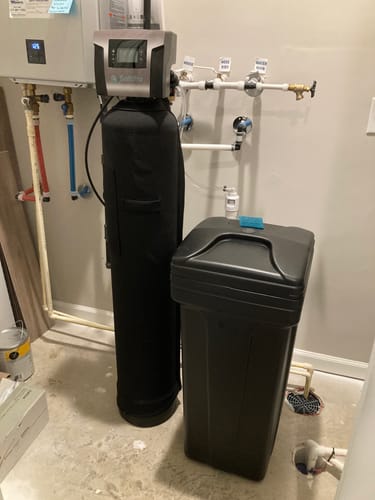
Once I understood the scope of our hard water problem, I dove deep into researching solutions. I spent weeks reading about different technologies, comparing systems, and trying to understand what would actually work for our specific situation.
The first thing I learned was that not all water softeners are created equal. Traditional salt-based ion exchange systems seemed to be the gold standard for actually removing hardness minerals, but I also discovered newer salt-free conditioning systems that claimed similar benefits without the sodium addition.
I researched the science behind ion exchange technology, learning how specialized resin beads attract and trap calcium and magnesium ions while releasing sodium ions in return. This process physically removes the hardness minerals rather than just changing their structure. For our high hardness levels, most experts recommended this proven approach over newer alternatives.
Capacity became a crucial consideration. With four people in our household and roughly 300 gallons of daily water usage, I needed a system that could handle our demand without constant regeneration cycles. The calculations showed I needed at least a 40,000-grain capacity system to maintain efficiency.
I also investigated certification standards, learning about NSF/ANSI Standard 44 for water softening systems. This certification ensures the system actually performs as claimed under real-world conditions. Any system I considered had to meet these rigorous testing requirements.
Installation requirements varied significantly between brands. Some required professional installation due to complex control systems or non-standard connections, while others offered straightforward DIY installation for handy homeowners. As someone comfortable with basic plumbing, I preferred a system I could install myself.
The SoftPro ECO caught my attention because it combined proven ion exchange technology with modern efficiency features. Unlike older systems that regenerated on fixed schedules regardless of actual usage, this unit monitors water consumption and only regenerates when necessary. This demand-initiated regeneration promised significant savings in salt and water usage.
Why I Chose the SoftPro ECO Over Other Options
After comparing dozens of systems across different price points and technologies, several factors made the SoftPro ECO stand out as the best fit for our situation.
The build quality impressed me immediately. The mineral tank uses a one-piece design without welds or joints that could fail over time. The control valve is manufactured in-house rather than sourced from third-party suppliers, giving SoftPro complete quality control over the critical components.
Efficiency ratings played a major role in my decision. The ECO's upflow regeneration system uses 75% less salt than traditional downflow designs. Instead of flushing salt solution through the entire resin bed, upflow regeneration focuses on the most depleted resin first, achieving complete regeneration with minimal waste.


The 10-year warranty coverage exceeded what most competitors offered. While many brands provided 3-5 year warranties with limited coverage, SoftPro backed their system with comprehensive protection including parts, labor, and even shipping costs. This gave me confidence in their product quality and customer support commitment.
I appreciated the simplicity of the control system. Rather than complicated digital displays with multiple programming options, the ECO uses a straightforward dial system for basic settings. After programming our water hardness level and household size, the system handles everything automatically.
The space requirements fit our utility room perfectly. At 14 inches wide by 65 inches tall, the single-tank design took up minimal floor space while providing 48,000-grain capacity - more than adequate for our family's needs with room for growth.
NSF certification for Standard 44 confirmed the system would actually deliver the performance claims. Independent testing verified the ECO's ability to remove hardness minerals while maintaining consistent water pressure and flow rates throughout the regeneration cycle.
Unboxing and First Impressions of Build Quality

The SoftPro ECO arrived via freight delivery on a wooden pallet, wrapped in protective plastic with corner guards preventing shipping damage. The driver helped position it in my garage using a hand truck, which was necessary given the 180-pound weight of the complete system.
Unwrapping revealed excellent packaging design with custom-fitted foam inserts protecting all components. The main mineral tank dominated the shipment with its deep blue fiberglass construction and professional-grade finish. Running my hands over the surface showed smooth, consistent texture without any visible defects or manufacturing flaws.
The control valve assembly came pre-mounted to the tank, eliminating potential installation errors from field assembly. The bypass valve was included as a separate component with clear installation instructions. All fittings appeared to be high-quality brass construction rather than plastic alternatives I'd seen on budget systems.
Inside the documentation package, I found detailed installation manuals with actual photographs rather than confusing line drawings. The programming guide explained each setting clearly with examples for different household sizes and water conditions. A laminated quick-reference card provided the essential information for ongoing operation.
The included installation hardware exceeded my expectations. Rather than generic hardware store fittings, SoftPro provided purpose-built components designed specifically for their system. The flexible connectors were the correct length for standard installations, and the mounting https://www.softprowatersystems.com/collections/water-softeners-for-city-water hardware matched the system's professional appearance.
Examining the control valve revealed solid construction with metal components where other manufacturers might use plastic. The regeneration motor operated smoothly during my pre-installation testing, and the bypass lever moved with positive engagement between positions.
Installation Experience and Setup Process
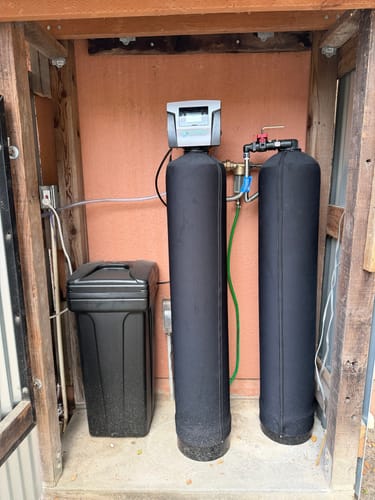
Installing the SoftPro ECO took most of a Saturday morning, though I could have completed it faster without stopping to photograph each step for my own documentation. The process proved straightforward for anyone comfortable with basic plumbing connections.
I started by selecting the installation location in our utility room, ensuring adequate clearance for salt loading and service access. The system needed to be positioned near the main water line entry point, with access to electrical power and a drain connection for regeneration discharge.
Shutting off the main water supply and draining the lines took about fifteen minutes. I cut into the main line using a pipe cutter, then installed the bypass valve assembly according to the provided instructions. The pre-threaded connections simplified this step significantly compared to systems requiring field threading.
Connecting the system to the bypass valve used the supplied flexible connectors, which had enough length to accommodate slight positioning adjustments. The connections tightened smoothly without requiring excessive force or additional sealants beyond the included fittings.
The drain connection required running a half-inch line to my utility sink, about eight feet away. I used standard PVC pipe and fittings for this connection, ensuring proper slope for gravity drainage. The control valve includes an air gap feature preventing any possibility of back-siphoning.
Electrical connection was simple since the system only requires a standard 110V outlet. The power cord reached my existing outlet without needing extension cords or additional wiring. A dedicated circuit isn't necessary given the low power consumption of the control valve motor.
Programming took less than ten minutes once I had the system connected and powered. I set our water hardness at 18 grains per gallon, selected the household size setting for four people, and verified the current time. The system automatically calculated optimal regeneration frequency based on these parameters.
Initial startup involved slowly opening the bypass valve to fill the system and check for leaks. Everything remained dry throughout the process. The first regeneration cycle ran automatically to properly condition the resin bed, taking about ninety minutes to complete.
Performance Testing and Real-World Results
The transformation in our water quality became apparent within 24 hours of installation. I tested the system's performance using both water hardness test strips and a digital TDS meter to quantify the improvements objectively.
Baseline testing before installation showed incoming water hardness of 18 grains per gallon and total dissolved solids around 380 ppm. After the initial regeneration cycle, post-treatment water tested at zero grains hardness with TDS levels dropping to approximately 340 ppm - the reduction representing the removed calcium and magnesium minerals.
The first noticeable change was in our morning coffee routine. The metallic aftertaste disappeared completely, replaced by the clean, neutral flavor I remembered from our previous home. Even my wife, who isn't particularly sensitive to water taste, commented on the improvement without prompting.
Soap performance improved dramatically throughout the house. Dish soap created richer lather with less product needed for effective cleaning. Our dishwasher, which had been leaving spots and film on glassware, suddenly produced sparkling clean dishes without any changes to detergent or rinse aid.
Shower experiences became noticeably better within a week. The slippery feeling of soft water took some adjustment initially, but the benefits to skin and hair quickly became apparent. My wife's dermatologist noticed the improvement at her next appointment, crediting the softer water for reduced skin irritation.
I monitored the system's regeneration frequency over the first month, finding it averaged every six days based on our actual water usage. This matched the manufacturer's projections for our household size and hardness levels, confirming the demand-initiated regeneration was working properly.
Water pressure remained consistent throughout the house during regeneration cycles. Unlike some systems that significantly reduce pressure during backwashing, the ECO's bypass design maintained normal pressure to all fixtures while regenerating.
After three months of operation, I tested the system again to verify consistent performance. Hardness levels remained at zero grains per gallon, and the regeneration frequency had stabilized at exactly six-day intervals based on our usage patterns.
Long-Term Operation and Maintenance Experience
Eighteen months of ownership have confirmed the SoftPro ECO's reliability and low-maintenance operation. The system has required minimal attention beyond periodic salt additions and occasional cleaning of the brine tank.
Salt consumption averages about two 40-pound bags per month for our household. The upflow regeneration design uses approximately 6 pounds of salt per cycle compared to the 15-20 pounds required by traditional downflow systems. This efficiency translates to roughly $15 monthly in salt costs versus the $35-40 I'd calculated for conventional systems.
The brine tank requires cleaning every six months to prevent salt bridge formation and maintain optimal operation. This involves dissolving any remaining salt, wiping down the tank interior, and refilling with fresh salt. The process takes about thirty minutes and prevents the operational issues that plague neglected systems.
I've experienced zero mechanical problems or component failures over eighteen months of continuous operation. The control valve cycles smoothly through regeneration sequences, and the bypass valve maintains proper sealing without leaks or drips. The system's reliability has exceeded my expectations based on experiences with other water treatment equipment.
Water usage for regeneration averages about 25 gallons per cycle, significantly less than the 50-75 gallons required by older systems. With regeneration every six days, monthly water usage for the softener totals roughly 125 gallons - negligible compared to our 9,000-gallon monthly household consumption.
The manufacturer's customer support proved helpful when I had questions about optimizing settings for our usage patterns. Their technical team provided specific recommendations for our water conditions and confirmed my maintenance schedule was appropriate for our local water chemistry.
Ongoing operational costs remain low with salt being the only regular expense. No filters require replacement, and the resin bed should provide 10-15 years of service under normal conditions. The system's efficiency features continue delivering the cost savings I calculated during my initial research.
Final Assessment and Recommendation
After eighteen months with the SoftPro ECO, I can confidently say it solved every hard water problem we experienced and continues delivering consistent, reliable performance. The investment has paid for itself through reduced cleaning time, improved appliance efficiency, and better quality of life.
The system excels in efficiency, using 75% less salt and water than conventional softeners while providing superior hardness removal. Build quality appears excellent with no signs of wear or deterioration after continuous operation. The 10-year warranty provides peace of mind for long-term ownership.
Installation proved manageable for DIY homeowners with basic plumbing skills, though professional installation remains an option for those preferring expert setup. The simplified control system eliminates programming confusion while still providing precise operation based on actual water usage.
Operational costs remain low with salt consumption averaging $15 monthly for our family of four. The system's demand-initiated regeneration prevents waste while maintaining optimal water quality. Maintenance requirements are minimal beyond periodic salt addition and annual brine tank cleaning.
I'd recommend the SoftPro ECO for households dealing with moderate to high hardness levels who want proven ion exchange technology with modern efficiency features. The system provides excellent value for families prioritizing reliability, efficiency, and low maintenance requirements.
Would I purchase this system again?
Absolutely. The SoftPro ECO has exceeded my expectations for performance, reliability, and operating costs while solving our hard water problems completely. For homeowners facing similar water quality challenges, this system represents an excellent long-term solution.