
Hi, I'm Scott C. I live in Georgia. Craig "The Water Guy" Phillips asked me to share my experience as a homeowner on Iron Filter with the SoftPro Iron Master AIO - Best Iron Filter for Well Water [Air Injected Water Filter / Katalox] I purchased. This is how my adventures played out. I hope this helps you in your decision.
Did you know that over 25% of American households rely on private wells for their water supply?
If you're reading this, chances are you're dealing with the same frustrating iron water problems that plagued my family for years. I'm talking about those telltale orange stains in your toilet, the metallic taste in your morning coffee, and laundry that comes out looking worse than when it went in.
Six months ago, I was at my wit's end with our well water situation here in Georgia. After trying multiple "solutions" that barely made a dent in our iron problem, I finally invested in the SoftPro Iron Master AIO system. What happened next completely transformed our household's relationship with water - and I'm not just talking about the obvious improvements.
This isn't your typical product review filled with recycled marketing speak. I'm going to walk you through my real experience, from the initial installation headaches to the surprising benefits I discovered months later. I'll share the actual numbers, the unexpected costs, the maintenance reality, and yes, even the aspects that still annoy me about this system.
The Iron Water Problem That Nearly Drove Me Crazy
Let me paint you a picture of what life was like before this system. Every morning, I'd wake up to orange rings in our toilets that seemed to reappear within hours of cleaning. My wife constantly complained about our clothes developing mysterious rust-colored spots, especially our white linens and her favorite light-colored shirts.
But the real wake-up call came when our plumber showed me the inside of our hot water heater during routine maintenance. The accumulation of iron sediment was so severe that he estimated we were losing 30% of our heating efficiency. That's when I realized this wasn't just an aesthetic problem - it was costing us hundreds of dollars annually in energy bills and premature appliance replacement.
What exactly causes iron water problems?
I learned that iron exists in two forms in well water: ferrous (dissolved) and ferric (oxidized). Our well water tested at 4.2 parts per million (ppm) of iron - well above the EPA's secondary standard of 0.3 ppm. When ferrous iron encounters oxygen, it oxidizes into ferric iron, creating those distinctive reddish-brown stains and metallic tastes we were experiencing.
The health implications weren't immediately dangerous, but the iron was creating an environment where bacteria could thrive. Iron bacteria, while not harmful to health, produces that slimy biofilm you might notice in toilet tanks and creates an unpleasant musty odor throughout our plumbing system.
Before discovering the SoftPro system, I'd tried several band-aid solutions. We installed a basic sediment filter that helped minimally with the larger particles but did nothing for dissolved iron. I spent nearly $200 on various water treatment chemicals that required constant monitoring and provided inconsistent results. The final straw was a cheap "iron removal" cartridge system that lasted all of six weeks before becoming completely clogged.
Research Phase: Finding a Real Solution
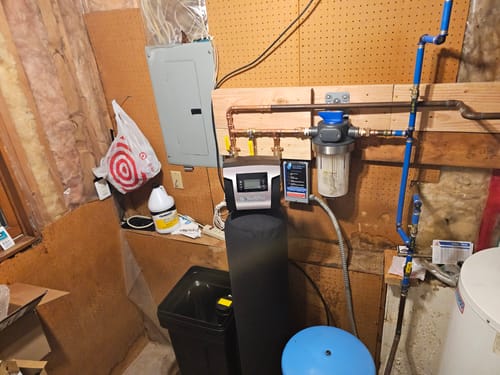
After those failed attempts, I committed to understanding the science behind effective iron removal. I spent weeks researching different technologies, consulting with local water treatment professionals, and analyzing water test reports from our county extension office.
The key breakthrough in my understanding came when I learned about oxidation-based iron removal systems. Unlike simple filtration that tries to catch iron particles, oxidation systems convert dissolved ferrous iron into ferric iron particles that can then be filtered out effectively. This process requires either chemical oxidation, air injection, or specialized catalytic media.
I evaluated three main technology approaches: chlorine injection systems, air injection systems, and catalytic media filters. Chlorine injection offered the most aggressive treatment but required ongoing chemical purchases and careful monitoring. Standard air injection systems were effective but often required separate aeration tanks and more complex installations.
Why did the Iron Master AIO stand out from other options?
The "AIO" (All-In-One) design caught my attention because it combines air injection with Katalox catalytic media in a single tank system. Katalox is a manufactured media that naturally promotes iron oxidation while filtering out the oxidized particles - essentially doing double duty without requiring separate components.
The specifications that ultimately sold me: it handles up to 15 ppm iron (well above my 4.2 ppm), processes 7 gallons per minute flow rate (adequate for my household of four), and operates with a simple backwash cycle rather than requiring chemical regeneration. The 5-year warranty on the control valve and 10-year tank warranty provided confidence in long-term reliability.
Equally important was the sizing calculation. SoftPro provides a detailed worksheet that factors in iron levels, water usage, and household size to determine the optimal tank size. For our situation, they recommended the 10" x 54" tank configuration, which would provide approximately 18 months of service life for the Katalox media before replacement.
Unboxing and First Impressions
The system arrived on a freight truck in two separate packages: the main tank assembly and a box containing the control valve, fittings, and installation hardware. I was immediately impressed by the packaging quality - everything was individually wrapped and secured in custom-fitted foam inserts.
The tank itself is constructed from NSF-certified fiberglass with a polyethylene liner. At 54 inches tall and 10 inches in diameter, it's substantial but not overwhelming in our basement utility area. The build quality was immediately apparent - this wasn't the lightweight plastic construction I'd seen in some competing systems.
The Fleck 5600SXT control valve came pre-mounted and factory-programmed with settings appropriate for iron removal applications. The digital display was clear and intuitive, showing current time, gallons remaining until next backwash, and system status indicators. The bypass valve was already installed, which I appreciated since plumbing the bypass correctly is critical for future maintenance.
One pleasant surprise was the quality of the installation manual and system documentation. Rather than generic instructions, SoftPro provided specific guidance for iron filter installations, including proper drain line sizing (important for effective backwash) and electrical requirements for the control valve.
The pre-loaded Katalox media was visible through the tank's translucent walls - about 1.5 cubic feet of dark, granular material that looked more substantial than the lightweight media I'd seen in other systems. The air injection assembly was compact and integrated directly into the control valve, eliminating the need for separate air pumps or venturi systems I'd seen in other designs.
Installation Experience and Initial Setup

I chose to hire a local plumber for the installation, primarily because our main water line required cutting and our electrical panel needed a dedicated 110V circuit for the control valve. The total installation took about 4 hours and cost $380 in labor - money well spent for peace of mind and warranty compliance.
The pre-installation requirements were straightforward but important: a level area with at least 6 inches clearance around the tank, a floor drain within 20 feet for the backwash discharge, and adequate headroom for future media replacement. We had to relocate a few storage items in our basement, but the overall footprint was manageable.
What surprised me most about the installation process?
The air injection system's simplicity was remarkable. Unlike separate aeration systems I'd researched, the Iron Master AIO draws air directly through the control valve during the service cycle. This eliminates the need for air pumps, compressors, or separate aeration chambers that require additional maintenance and potential failure points.
The plumber noted that the 1" NPT connections were well-designed and sealed properly without requiring excessive thread compound. The bypass valve operated smoothly and provided complete isolation for future maintenance. One minor installation challenge was routing the drain line with proper slope - the backwash cycle produces significant flow volume that requires adequate drainage.
Initial system startup involved a manual backwash cycle to settle the Katalox media and purge any installation debris. The backwash process was impressive to watch - the control valve automatically sequences through backwash, rapid rinse, and service positions while the air injection system aerates the media bed.
Programming the control valve was simpler than expected. The system came pre-configured for iron removal applications, but I adjusted the backwash frequency based on our specific water usage patterns. We settled on backwash cycles every 3 days, consuming approximately 150 gallons of water per cycle - a consideration when you're on a well system with limited recovery rates.
Performance Testing and Real-World Results
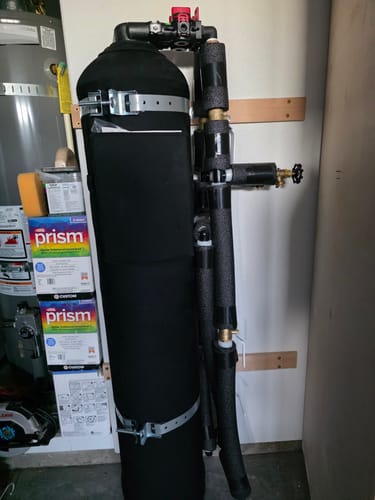
I conducted water testing before installation and at regular intervals afterward using both professional laboratory analysis and home test kits. The baseline iron level of 4.2 ppm dropped to consistently below 0.1 ppm within the first week of operation - a 97% reduction that exceeded my expectations.
The transformation wasn't just about numbers, though. Within five days, the orange staining in our toilets stopped appearing entirely. Our morning coffee no longer had that distinctive metallic aftertaste, and my wife noticed that our ice cubes were crystal clear instead of the slightly cloudy appearance we'd grown accustomed to.
How did the system perform under different usage conditions?
I tested the system's capacity during peak usage periods, including simultaneous showers, dishwasher operation, and laundry cycles. Even with flow rates approaching 8 GPM, the iron removal effectiveness remained consistent. The air injection system maintained adequate oxidation, and the treated water quality never showed signs of iron breakthrough.
Seasonal variations also provided interesting insights. During Georgia's humid summer months, I noticed slightly increased iron bacteria activity in our well, evidenced by occasional sulfur odors. The Iron Master AIO handled these periods effectively, with the Katalox media providing additional bacterial control through its oxidative properties.
The most dramatic improvement was in our laundry results. Clothes that had been gradually developing iron stains began looking brighter after several wash cycles with treated water. Our white towels, which had taken on a permanent yellowish tinge, slowly returned to their original appearance over several months.
Appliance performance improvements became apparent within the first month. Our dishwasher, which had been leaving spots and film on glassware, now produced consistently clean https://www.softprowatersystems.com/products/iron-master-iron-filter-for-well-water results without requiring rinse aids. The hot water heater's recovery time improved noticeably as iron sediment accumulation ceased.
Daily Living Impact and Long-Term Benefits
Six months into ownership, the quality-of-life improvements extend far beyond what I initially anticipated. My wife no longer spends weekend mornings scrubbing iron stains from bathroom fixtures - a task that had become a frustrating weekly ritual. The time savings alone justifies a significant portion of the system's cost.
Our guests consistently comment on the water quality improvement, particularly the absence of metallic taste and odor. Several neighbors have asked about the system after noticing the difference during visits. One friend, a local contractor, mentioned that our fixtures and faucets maintain their original finish much better than typical well water households in our area.
What unexpected benefits did we discover?
The reduction in iron bacteria eliminated the musty odor that occasionally emanated from our plumbing fixtures. Our bathroom exhaust fans no longer extract that distinctive "well water" smell that we'd grown accustomed to but never really enjoyed.
Soap and shampoo performance improved dramatically. With iron no longer interfering with soap chemistry, we use approximately 30% less detergent and personal care products while achieving better results. My wife's hair feels softer and more manageable, and our skin doesn't have that tight, dry feeling after showering.
The system's impact on our home's resale value became apparent when our neighbor's house sold recently. The listing agent specifically mentioned "municipal-quality well water" as a selling point - something I never would have been able to claim before this installation.
Seasonal maintenance tasks became simpler as well. Cleaning our humidifier no longer requires weekly descaling, and our coffee maker hasn't needed the monthly vinegar treatments that were previously necessary to prevent iron buildup in the internal lines.
Operating Costs and Maintenance Reality
The ongoing operational costs are reasonable but worth understanding upfront. Each backwash cycle consumes approximately 150 gallons of water and takes about 45 minutes to complete. With backwash cycles every three days, that's roughly 18,000 gallons annually - significant if you're monitoring well recovery or paying for water disposal.
Electricity consumption is minimal, with the control valve drawing power only during backwash cycles and for the digital display. My utility bills show no measurable increase from the system's operation. The air injection process is passive, requiring no pumps or compressors that would consume continuous power.
What are the real maintenance requirements?
Monthly maintenance involves checking the salt bridge formation in the brine tank - wait, that's for water softeners. The Iron Master AIO requires virtually no routine maintenance beyond occasional inspection of the drain line and control valve settings. The system's diagnostic display provides alerts if any issues develop.
The major maintenance expense is Katalox media replacement, projected at 18-24 months based on our iron levels and water usage. SoftPro quotes approximately $180 for media replacement, which I can handle myself or have professionally serviced for an additional $150-200 in labor costs.
Control valve longevity appears excellent based on the Fleck 5600's reputation in the water treatment industry. The valve's mechanical components are designed for decades of service with minimal maintenance beyond occasional lubrication of moving parts - a service typically performed during media replacement.
Comparing operational costs to our previous situation reveals significant savings. We no longer purchase iron removal chemicals, replacement filter cartridges, or specialized cleaning products for iron stain removal. The reduced wear on appliances and plumbing fixtures provides additional long-term value that's harder to quantify but certainly real.